
Axel Palmstrom, who earned his bachelor’s degree in chemical engineering from UC Santa Barbara, has been named to Clarivate’s 2025 Highly Cited Researchers list, which identifies researchers who are in the top one percent in terms of global citations over the previous eleven years.
Palmstrom is senior scientist and the manager of the Advanced Materials and Processing group at the National Laboratory of the Rockies (NLR), formerly known as the National Renewable Energy Laboratory (NREL). He is among 6,868 researchers across 60 countries who have been acknowledged for the significance and influence of their work.
“Several colleagues and mentors I admire have received this recognition, and being named alongside them is an honor,” said Palmstrom, who for more than a decade has worked on metal halide perovskite semiconductors and devices — materials poised to shape the next generation of optoelectronics.
Palmstrom joined the NLR in 2018 after earning his PhD from Stanford University in the group of chemical engineering professor Stacey Bent. At NLR, he worked on fundamentals and novel applications of atomic layer deposition (ALD) processes, which are important steps in fabricating semiconductor devices.
“ALD is ideally suited to grow conformal thin films on soft materials, such as perovskites,” he noted. “During my graduate research, I first had the opportunity to apply my ALD background to metal halide perovskite solar cells through a collaboration with the team of Michael McGehee, then a materials science and engineering professor at Stanford.”
It was through this collaboration that Palmstrom’s most cited works came about, including the first demonstrations of high-efficiency metal halide perovskite tandem solar cells — devices that stack two different semiconductors so that they can each absorb specific wavelengths of light.
Because of that unique “stacked” design, Palmstrom says, “Tandem devices can achieve greater efficiency than single-junction solar panels, such as those made from silicon or cadmium telluride.”
As promising as metal halide perovskites are, they are also soft materials that can be easily damaged when other materials are put on top. Palmstrom’s team developed an ALD-based tin-oxide layer that can be deposited on perovskites without impairing them. This protective layer allows manufacturers to add the necessary transparent conducting materials, enabling the fabrication, at scale, of both silicon-perovskite and perovskite-perovskite tandem solar cells. This innovation helped to demonstrate the potential of perovskite materials, pushing the technology closer to real-world use.
Upon hearing the news that his son had been named a highly cited researcher, Chris Palmstrom, a distinguished professor of materials, and electrical and computer engineering at UCSB, looked back on Axel’s development. “At UCSB, he found the rigor, mentorship, and hands-on lab work that shaped his path — from Chem-E competitions to practical training in the lab of the late, celebrated UCSB materials and electrical engineering professor Arthur Gossard, and lab technician John English," he said. “I am proud not only of Axel’s scientific achievements, but of his ingenuity, looking to use materials and structures he has been working on for novel applications beyond solar energy.”
Axel echoes his father, crediting UCSB’s role in shaping his identity as a researcher and sparking his interest in discovering new knowledge. “I believe that my time as an undergraduate student at UCSB taught me critical technical skills and creative problem solving,” he said “While I have always been hardworking, I have never endured as many all-nighters as during my time in Santa Barbara. Challenging at times, the experience was incredibly rewarding — thanks to engaging with inspiring professors from the Chemical Engineering Department, especially Michael Gordon, Todd Squires, and Eric McFarland.”
Palmstrom noted that working as a laboratory technician in the Molecular Beam Epitaxy (MBE) Laboratory at UCSB played a crucial role in laying the technical foundation for his research. From tightening conflat flanges and leak-checking chambers, to rebuilding pumps and understanding how vacuum systems work, the hands-on work set him apart from his peers in graduate school and remains a skillset he relies on today.
UCSB is also where Palmstrom began building the network that would guide his early career. The university’s strong reputation, its faculty, and a strong culture of conference participation opened doors to collaborations. “Impactful science depends not only on good ideas, but on the right people and partnerships to pursue them,” he said. “My experience at UCSB shaped all of those pieces and helped me get to where I am today.”
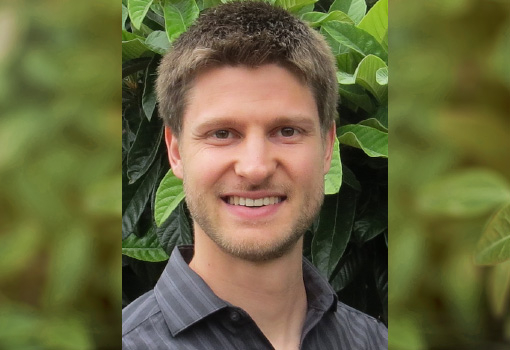
Axel Palmstrom, a UC Santa Barbara graduate, has been named as one of the world’s most cited researchers by Clarivate.