Two research teams led by UC Santa Barbara faculty have been selected for Phase I support through the U.S. Department of Energy’s (DOE’s) Genesis Mission, a new national initiative designed to accelerate scientific discovery with artificial intelligence (AI).
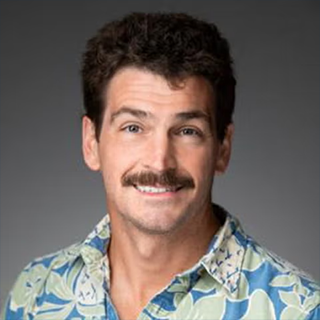
The projects are led by Michelle O’Malley, a professor of chemical engineering and bioengineering, and Justin Wilson, a professor of chemistry and biochemistry. Their teams are part of the first group of 278 projects selected for the initiative, which DOE announced July 22 during the Genesis Mission Summit in Washington, D.C. The selected projects represent 342 participating institutions, including 16 national laboratories, 142 universities, 157 companies, and 13 nonprofit organizations.
The Genesis Mission is a historic national initiative led by the U.S. Department of Energy, which is building the world’s most powerful integrated science discovery platform. By uniting government, industry, academia, and philanthropy, it is accelerating breakthroughs in energy, scientific discovery, and national security through a new platform that combines AI, supercomputing, quantum systems, and advanced scientific instruments.
“The DOE’s selection of two UCSB faculty to lead projects in the inaugural phase of the Genesis Mission reflects the ingenuity of our faculty and the strength of our interdisciplinary research environment,” said UCSB Vice Chancellor for Research Rachel Segalman, who is also the Edward N. Kramer Distinguished Professor of Materials and Chemical Engineering. “Professors Michelle O’Malley and Justin Wilson are bringing together advanced computation, specialized facilities, and deep scientific expertise to tackle problems that would be difficult to address through any one discipline alone.”
According to the DOE, the goal of the Phase I RFA awards is to identify promising pathways toward transformative scientific capabilities and establish a foundation for future investment and scale. Project teams will design and demonstrate research workflows that integrate AI with scientific investigation, while rigorously evaluating whether those approaches can accelerate discovery, improve predictive capabilities, enhance experimentation, or generate new scientific insights.
“America has no shortage of bold ideas or talented scientists, and the response to the Genesis Mission proves that,” said U.S. Secretary of Energy Chris Wright in a statement issued by the DOE. “The 278 projects selected today represent the very best of our nation’s scientific enterprise. The remarkable number of high-quality proposals we received demonstrates that America’s innovation pipeline is strong, and it points to even greater opportunities for future investment and continued expansion of the Genesis Mission portfolio.”
Teaching AI How Communities of Microbes Work
O’Malley’s project, titled “Precision Microbiome Engineering in Anaerobic Communities: From Deconstruction to Bioproduction,” seeks to predict how communities of microorganisms behave, a challenge that becomes increasingly complex as species interact, compete, and respond to changing conditions.
“Biology is incredibly unpredictable,” said O’Malley, the Cliff R. Scholle Endowed Chair of Chemical Engineering. “Once you bring many organisms together, it becomes very difficult to know what they will do. We want to collect enough high-quality data that AI can begin to recognize the patterns and help us design microbial communities that produce a result we want.”
Her team will study anaerobic microbes, organisms that live without oxygen. In nature, these communities help break down tough plant material. The researchers want to learn how to direct them to convert plant waste into medium-chain fatty acids, or MCFAs, which are chemical building blocks used to make products including fuels, bioplastics, detergents, medicines, personal-care products, and advanced materials. Natural sources are limited, so finding an efficient way to produce them from waste could offer a more sustainable alternative.
The long-term goal is simple to describe, even if it is difficult to achieve: start with a waste material, choose a useful chemical, and assemble the right microbial community to make it.
“We are trying to discover the rules for building a microbiome,” O’Malley said. “Which microbes should be combined? What should they be fed? What conditions help them produce the chemical we want? AI can help us sort through far more possibilities than people could test by hand.”
A Faster Way to Conduct Biological Experiments
The experimental work will take place in UCSB’s BioFoundry for Extreme and Exceptional Fungi, Archaea and Bacteria, known as ExFAB, a center funded by the National Science Foundation. Its automated anaerobic chamber is a specialized environment that allows robots and scientific instruments to conduct thousands of experiments without exposing the microbes to oxygen.
ExFAB’s ability to combine large-scale automation with an oxygen-free environment is a capability O’Malley said is not available at any other academic facility. Without it, researchers would have to handle samples individually inside smaller chambers, sharply limiting the number and complexity of experiments they could perform.
“These microbiomes are entirely anaerobic, so this project could not really be done anywhere else,” O’Malley said. “ExFAB gives us the ability to study them at a scale and with a level of control that simply was not possible before.”
In a traditional laboratory, researchers often grow cells in individual flasks or vials, which requires space and time, limiting how many experiments can be performed at once. ExFAB miniaturizes experiments into small wells arranged on plates, allowing robots housed within the anaerobic chamber to test many samples at the same time. For this project, researchers estimate that the platform can screen about 8,000 individual microbes or microbial communities each week, generating more than 100,000 microbes during the first four months.
An AI system will analyze the results, recommend the next experiments, and learn from each round of testing to identify promising combinations of microbes, nutrients, and growing conditions.
“AI cannot replace the experiment or take the measurement,” O’Malley said. “It needs reliable data from the real world. What excites me is that we are creating a platform that can generate that data at a scale that has not been possible before and then use it to make the next experiment smarter.”
The project also reflects UCSB’s broader philosophy of investing in shared research infrastructure in anticipation of future applications. By building facilities such as ExFAB around emerging scientific needs, the university creates capabilities that researchers can use to pursue questions and compete for national initiatives like the Genesis Mission.
“You build the right core instrumentation at the right time, in the right place and around the right people, and it opens doors,” O’Malley said. “UCSB is well positioned for this kind of work because it has invested in foundries and shared facilities that allow us to do things other institutions cannot.”
Bringing Together the Right Expertise
The project combines ExFAB’s distinctive experimental capabilities with expertise in machine learning, genome modeling, and genetic engineering from UCSB, Lawrence Berkeley National Laboratory, UC Berkeley, and Cerebras Systems. O’Malley will lead the overall project and direct the experiments conducted with ExFAB’s automated anaerobic platform.
Hector Garcia Martin of Lawrence Berkeley National Laboratory will lead the use of a machine-learning system, called the Automated Recommendation Tool, or ART, to analyze data from ExFaB and identify future experiments. At UC Berkeley, Ben Rubin will model bacterial genomes, and Brady Cress will test whether changing specific genes can increase production of the desired fatty acids. Michael James of Cerebras Systems will support the use of large-scale AI analysis.
“This is a problem that no one laboratory could solve alone,” O’Malley said. “Our collaborators bring different pieces of the puzzle, from machine learning and genome modeling to genetic editing. By connecting those capabilities to ExFAB, we can test what the AI predicts and learn from what actually happens.”
Phase I will concentrate on guiding microbes to make MCFAs. A second phase could expand on the processes of breaking down plant waste and could explore additional products, starting materials, and microbial communities.
Designing a Two-Step Molecular Filter for Critical Minerals
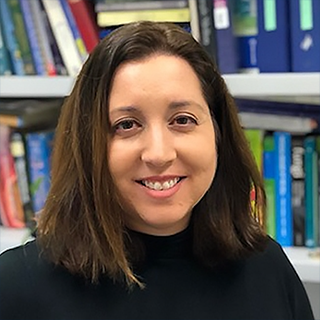
Wilson’s project, titled “HARVEST-CMM: Hybrid AI-driven Chelator-Protein Co-design for Robust Extraction and Selective Separation of Critical Mineral Materials,” addresses the difficult separation of critical minerals needed for advanced energy technologies, electronics, and national security.
Critical minerals, such as nickel, cobalt, and rare-earth elements, often have nearly identical chemical properties, making them extremely difficult to separate individually from ores, recycled electronics, and industrial waste.
Current methods often require numerous processing steps, which consume significant amounts of chemicals and energy, and generate substantial waste. The challenge is especially important in the United States, where limited domestic production of rare-earth elements and geopolitical constraints have heightened concerns about critical-mineral supply chains.
“One of the major challenges associated with obtaining them is that they are often chemically alike other metals,” Wilson said. “Isolating them in the elementally pure forms necessary for their technological applications requires energy-intensive and waste-generating processes.”
Combining Chemistry, Biology & AI
The researchers will use AI to design a two-stage system of molecules that can recognize rare-earth elements. A chelator, a small molecule that captures a metal ion like a claw gripping a ball, will first distinguish among materials by accounting for characteristics such as size, charge, and preferred molecular geometry. An engineered protein that can recognize subtle features of the resulting metal-chelator structure will then provide a second checkpoint before the target metal is extracted.
Finding the right chelator and protein combination would be extremely difficult through conventional trial and error. Researchers can modify countless features of a chelator, while even a relatively small protein can have an immense number of possible amino-acid sequences.
Instead, the team will use generative AI, machine learning, quantum-chemistry calculations, and experimental feedback to narrow that search. Computational models will predict the most promising candidates, which will then be synthesized and tested. The results from those tests will be fed back into the models so that the system can refine its predictions, identify patterns, and recommend the next designs. The team expects this closed-loop process to reduce the experimental search space by at least tenfold, and shorten design cycles from months to weeks.
Sparking New Collaborations
The project unites researchers from UCSB and Los Alamos National Laboratory. Wilson’s laboratory will synthesize and evaluate the chelators, drawing on his expertise in inorganic chemistry, coordination chemistry, and molecular systems that selectively bind metal ions.
Yang Yang, an associate professor of chemistry and biochemistry at UCSB, will lead the protein-design component, creating stable proteins that recognize selected complexes under conditions relevant to mineral processing.
“We will demonstrate the feasibility of AI-guided protein design tailored specifically for critical-material recovery and separation,” Yang said.
At Los Alamos, Ping Yang, deputy director of the G.T. Seaborg Institute for Transactinium Science, and researchers Michael Taylor and Danny Perez, will use machine learning, molecular simulation, and separation chemistry to predict the structures, stability, and behavior of metal complexes.
“This project is creating new collaborations that I am really excited about,” Wilson said. “Each group contributes a different capability, from AI-guided metal-complex design to synthetic chemistry and de novo protein design. We need all of those pieces to test whether this new approach can work.”
Demonstrating a New Separation Strategy
During the nine-month first phase, the team will establish the AI-guided workflow, synthesize several chelators, and identify at least one protein capable of selectively recognizing a target metal-chelator complex. Tests involving closely related metals will determine whether protein recognition improves selectivity at least twofold, compared with a chelator alone.
A second phase could advance practical separation technologies for domestic mineral sources, recycled materials, and waste streams. The AI framework could also support environmental cleanup, chemical sensing, catalyst development, and advanced-materials discovery.
“The dream result over these nine months would be to show that we can use AI to design new chelators and new proteins that recognize and, more importantly, differentiate between critical minerals,” Wilson said. “Discovering something non-obvious with the AI would be a major achievement that we could build upon in Phase II.”