
A new collaboration between researchers at UC Santa Barbara and Lawrence Livermore National Laboratory (LLNL) is bringing artificial intelligence (AI) into one of the most computationally demanding frontiers in modern physics: modeling the behavior of extreme plasmas relevant to nuclear fusion and other high-energy-density environments.
The collaboration is led at UCSB by Haewon Jeong, an assistant professor of electrical and computer engineering, whose research group specializes in ML methods for complex scientific systems. The project, one of five proposals selected from a pool of twenty-nine applicants submitted to LLNL’s Academic Collaboration Team, will be supported with $536,000 annually over three years. Jeong’s team is working alongside LLNL scientists, including co-primary investigator Min Sang Cho, to build AI-driven surrogate models capable of dramatically reducing the time required for large-scale plasma simulations.
“Physics simulations can be very expensive,” Jeong said. “The idea of surrogate modeling, especially AI surrogate modeling, is trying to bypass the need for solving partial differential equations, and learn from data to approximate simulation results, at a fraction of the computational cost.”
The project, “Machine-learned Non-LTE Kinetics,” combines expertise in machine learning (ML), plasma physics, and high-performance computing to develop faster and more efficient simulation tools for studying non-local thermodynamic equilibrium, or non-LTE, plasmas, which are extreme states of matter where traditional simplifying assumptions begin to break down. The project is aimed at helping scientists to better understand how matter behaves under some of the most extreme conditions imaginable.
“When an ultra-intense laser strikes a thin solid target, it ionizes the material, creating a highly energetic plasma that produces x-rays. Those x-rays help compress the fusion fuel to the extreme conditions needed for fusion,” Jeong said. “Accurately modeling these atomic states is crucial for understanding how energy is absorbed, radiation is produced, and, ultimately, how efficiently that energy can be used to drive fusion.”
Those calculations are extraordinarily difficult because plasmas involve massive numbers of atomic interactions occurring simultaneously across time and space. Existing simulation codes can model the physics with high accuracy, but doing so often requires enormous amounts of both computing resources and time.
The project combines several advanced ML techniques, including neural compression, generative modeling, and time-sequence prediction, areas Jeong’s lab has been developing across multiple scientific domains.
“What excites me most is that this project brings all of these growing areas of expertise together for an important scientific mission,” Jeong said.
For LLNL researchers, accelerating these calculations could have important implications for fusion-energy research and other high-energy-density physics applications.
“Laser fusion is one of the most promising scientific pathways toward providing humankind with an abundant, clean, and transformative energy source,” Cho said. “In 2022, Lawrence Livermore National Laboratory achieved fusion ignition for the first time in history, a major breakthrough recognized by the U.S. government as one of the most impressive scientific feats of the twenty-first century; however, ignition is not the final step.”
Cho, who joined LLNL in 2022, explained that scaling fusion toward practical energy production will require a deeper understanding of how radiation and energy move through fusion plasmas, particularly in complex non-LTE states that influence energy flow and overall system performance.
“Because these calculations are computationally expensive, they often become a bottleneck in large-scale design studies and ensemble simulations,” Cho said. “By making these calculations much faster, we can explore a broader range of plasma conditions and more efficiently understand the physical mechanisms that govern radiation and energy transport in fusion systems.”
Cho added that the collaboration could help demonstrate how AI can play a practical role in accelerating scientific discovery in energy research. “Ultimately, advances like this could contribute to addressing one of the major energy challenges facing humankind,” he said.
Neel Sankaran, a first-year PhD student in Jeong’s group, who is working on the project, said that the team is using ML to simplify enormously complicated plasma systems while still preserving the essential physics.
“The system is incredibly complex, and modeling every microscopic interaction directly is not practical,” Sankaran said. “We are trying to capture the important patterns without having to calculate every tiny interaction from scratch.”
For Sankaran, the project reflects a broader fascination with understanding chaotic natural systems through computation.
“I have always loved the idea that even the most chaotic systems in nature have some underlying mathematical structure,” he said. “There is something empowering about being able to explain that chaos through rational thought and computation.”
He added that the project’s connection to fusion and clean energy gives the research an even larger sense of purpose. “Energy is really the foundation for technological progress,” Sankaran said. “I like to think of this work as contributing to one of the bedrock problems for future scientific and technological development.”
The collaboration also highlights the growing importance of partnerships between universities and national laboratories in advancing emerging scientific fields. By combining UCSB’s expertise in AI and computational modeling with LLNL’s leadership in plasma physics and fusion research, the partnership allows researchers to tackle problems that would be much more difficult to solve independently.
For Jeong, success ultimately means developing AI tools that scientists can trust and use in real-world research environments.
“LLNL has its own simulation codes for laser-driven plasma physics that are used across divisions for nuclear fusion and other extreme plasma environments,” Jeong said. “If our AI surrogate model becomes integrated into those workflows and turns into a tool scientists rely on every day, that would be the ultimate success for our group.”
She added that the broader goal extends beyond a single project or application area.
“I hope this work helps move AI surrogate modeling from being an experimental research idea into a trusted part of scientific computing,” Jeong said. “If we can help researchers solve problems faster, explore more complex systems, and accelerate discoveries in fields like fusion energy, then that becomes a meaningful contribution not just to computational science, but potentially to society as well.”
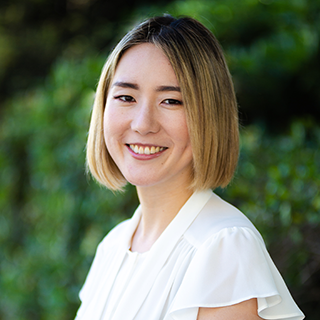
Caption: Haewon Jeong, an assistant professor of electrical and computer engineering at UCSB

The collaboration includes electrical and computer engineering assistant professor Haewon Jeong, her PhD student, Neel Sankaran (left), and Lawrence Livermore National Laboratory scientist Min Sang Cho (right).