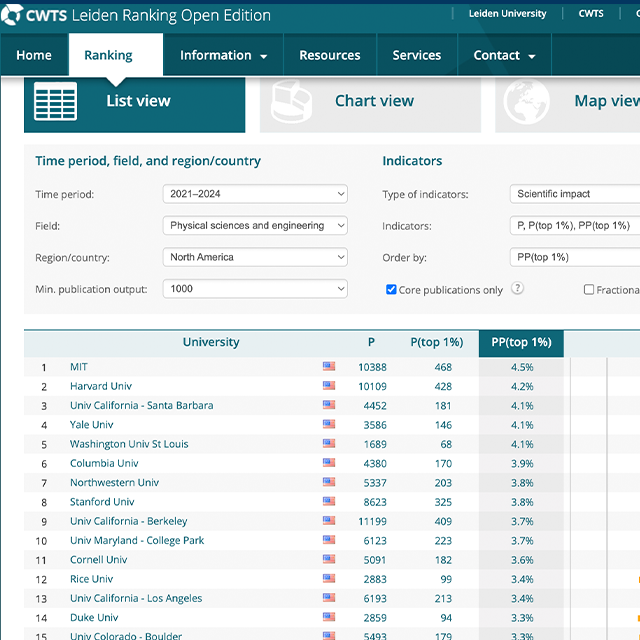
UC Santa Barbara ranks fourth in the world and first among U.S. public universities for producing the most highly cited research in physical sciences and engineering, according to the 2026 Leiden Ranking (Open Edition), released November 4 by the Centre for Science and Technology Students (CWTS) at Leiden University in the Netherlands.
The results mark the 16th consecutive year that UCSB has ranked among the nation’s top two public universities for the percentage of its research publications in the world’s top 1% most cited, underscoring a remarkable record of sustained scientific excellence.
UCSB also earned top-ten global rankings across two additional measures of research impact, placing ninth worldwide for publications among the top 5% most cited and eighth for research in the top 10%. The university ranked first among U.S. public universities in all three categories.
The Leiden rankings measure scientific influence by analyzing how frequently research publications by other scholars worldwide. The Open Edition uses the OpenAlex database to evaluate universities through objective publication and citation data. The 2026 analysis examined research published from 2021 through 2024. Among universities producing at least 1,000 publications in physical sciences and engineering, whether or not they were co-authored by researchers at multiple universities, during that period, UCSB distinguished itself across four measures of research impact:
• Top 1%: 181 publications (4.1% in top 1%), ranking fourth worldwide, third nationally (behind MIT and Harvard), and first among U.S. public universities
• Top 5%: 576 publications (12.9% in top 5%), ranking ninth worldwide, fourth nationally, and first among U.S. public institutions
• Top 10%: 971 publications (21.8% in top 10%), ranking eighth worldwide, fourth nationally, and first among U.S. public institutions
• Top 50%: 2,942 publications (66.1% in top 50%), ranking 34th worldwide, eighth in North American, and second among U.S. public institutions
Each category measures the percentage of a university’s publications that fall among the most frequently cited research worldwide, compared with papers in the same scientific field and publication year. A paper in the top 1%, for example, has received more citations than approximately 99% of comparable research.
UCSB's performance is especially notable at the highest levels of scientific impact. While 1% of publications would ordinarily be expected to reach the top 1% citation threshold, UCSB's research achieved more than four times the expected rate. Similarly, more than one in five UCSB publications ranked among the world's top 10% most cited, more than double the expected proportion.
For Umesh Mishra, dean of The Robert Mehrabian College of Engineering, the latest results reflect both the extraordinary influence of UCSB's research and the institutional culture that has sustained it for decades.
"Ranking fourth in the world and first among U.S. public universities is an extraordinary distinction, but what makes this achievement especially meaningful is its consistency," said Mishra. "For 16 consecutive years, UC Santa Barbara has been among the nation's top two public universities for producing the most influential research in our fields. That kind of sustained excellence doesn't happen by accident. It reflects a culture of ambitious thinking, collaboration, and discovery, driven by faculty and students whose work continues to shape the future of science and engineering."